
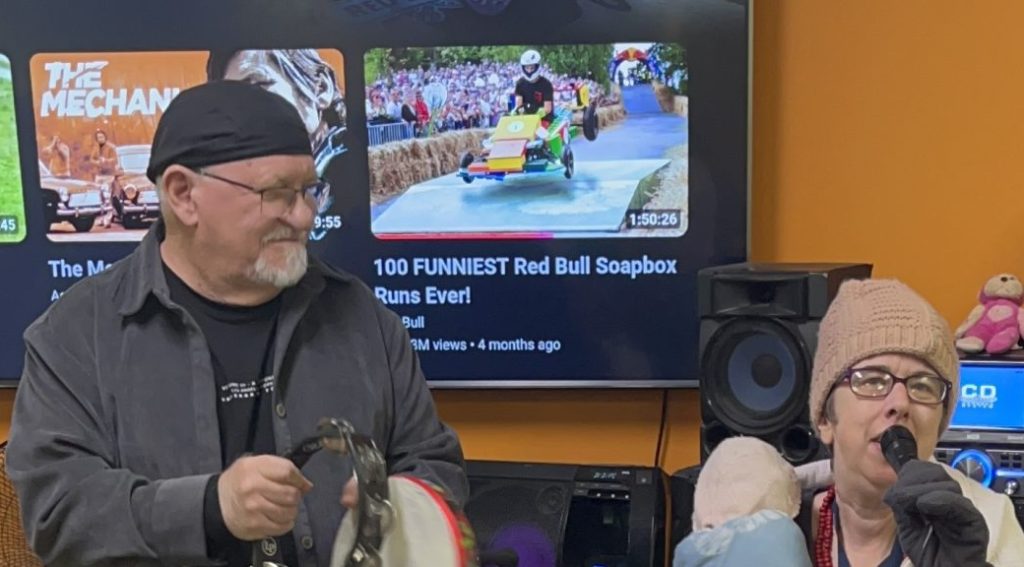
Meet ConnectAbility Community Support Worker Paul Corkett.
Paul has been supporting ConnectAbility customers for nearly 11 years. He sat down with our team recently to tell us the importance of music in disability work.
- What do you love most about working at ConnectAbility?
I love the customers and the staff, they’re fantastic. On a Monday, we do music at the Warabrook Hub in the morning, cooking after that and music again in the afternoon. I am the only male in the cooking group and it’s been going for 10 years. I met my wife at ConnectAbility, and she has been working here for 20 years!
- Can you tell us a bit about your background and what you studied?
I started in a high school band doing high school dances in second form, before playing in local bands and supporting many major events in Australia. I have worked with Cold Chisel, INXS, Midnight Oil, The Angels, the Divinyls and more. In terms of study, I have my Certificate 4 in Community Services. I’m so glad I also get to use music in my work. I have played in bands since I was 13 – it’s my blood.
- Can you share your story and what led you to retrain and work in music and disability support?
Eighteen years ago I had a cervical spine injury. I retrained in disability support because it was always an interest of mine. I grew up with it, in a way. I also have two beautiful, talented children who are both very musical on the piano and drums. It’s nice that they tell me they’re both proud of what I do.
- What do you love most about combining music with disability support?
I love the reaction on the customers’ faces, what they get out of it. For example, when one of our customers first came into the group, the music appeared too loud for her and she didn’t want to participate. After a while I noticed she was tapping her foot and really enjoying it. As she slowly got used to the idea, her whole demeanor has changed. Whereas for many other customers, they hear some music and immediately get involved. Seeing its impact on people is amazing as music is very calming.
- How does music help your clients express themselves or connect in ways words sometimes can’t?
By choosing their own songs our customers feel that they are able to express themselves. Each customer has their own songs that they like and everyone’s genres are specific. We play the songs through a music player and we have drums for them to play along on as well. We’ve been incorporating karaoke off and on into the music sessions.
- What does a typical day in your role look like?
I will come into work, set up the music instruments and equipment, make sure it works, wait for the customers and interact with them and then run the group. I run music on Monday and Thursday. I am also a community support worker for a customer I’ve had for 10 years.
- What’s something people might not realise about this kind of work?
I have found that some people do not realise that each customer is so individual with what music they like. It’s nice to be able to encourage them to explore and express this individuality. It’s about them not us. We make sure all our ConnectAbility workers embody this.
- If you could share one message with other disability support services about the power of music in disability support, what would it be?
Do it. It is so uplifting. Music touches our soul and it reaches places that other things just can’t.
Paul shares a short video of him supporting one of his customers with her karaoke session below: